Future Park
Speculating the future of outdoor recreation
Project Info
For my Graduate Design Thesis I explored the future of outdoor recreation through a 6 month long speculative design project that was completed in May 2022. For this project, I took the perspective of a fictional organization called Future Park. Through the persona of Future Park, I explored how the rise of XR and advanced vehicle technology could drastically change the way we engage with nature. This project explored a range of sub topics through rapid XR prototyping to illustrate and allow people to experience possible futures of outdoor recreation. I was interested in the innate tension between nature and technology. These experimental prototypes enticed people to think about their own relationship with nature and technology.


Future Park Branding
Future Park’s brand identity drew inspiration from Nasa and the National Park Service. I wanted the organization to combine the futuristic aesthetics of Nasa, with a minimal and authoritative feel of the National Park Service. The logo was influenced by the National Park Service’s 50th anniversary rebranding that failed because it made rangers “Look like a Trekkie.” The slogan, “Beyond Rugged,” came from a Forbes article called, “Why The Future Of Outdoor Recreation Is Purposeful, Protective And Powerful,” by Kim Bates. The article states, “As we move further into the future, I expect that we will move beyond “rugged” products and services and see a rise in “exo-gear” to give us human superpowers beyond our wildest dreams.” This quote served as a foundation for my research into the speculative future of outdoor recreation.
Site Specific AR Research

Researching the current state of site specific augmented reality
To begin speculating the future of outdoor recreation, I started out by assessing the current state of site specific augmented reality. I was interested in the ability to have hidden AR sculpture installations at parks where guests could encounter hidden art along the trail. I started out by assessing the current technical hurdles with mapping AR content to organic subjects and the use of pre-existing signage to trigger content to appear. Using a Unity, Vuforia, and a Google Pixel phone, I created mobile AR prototype apps that tested image target triggering and various content mapping methods.
On site testing
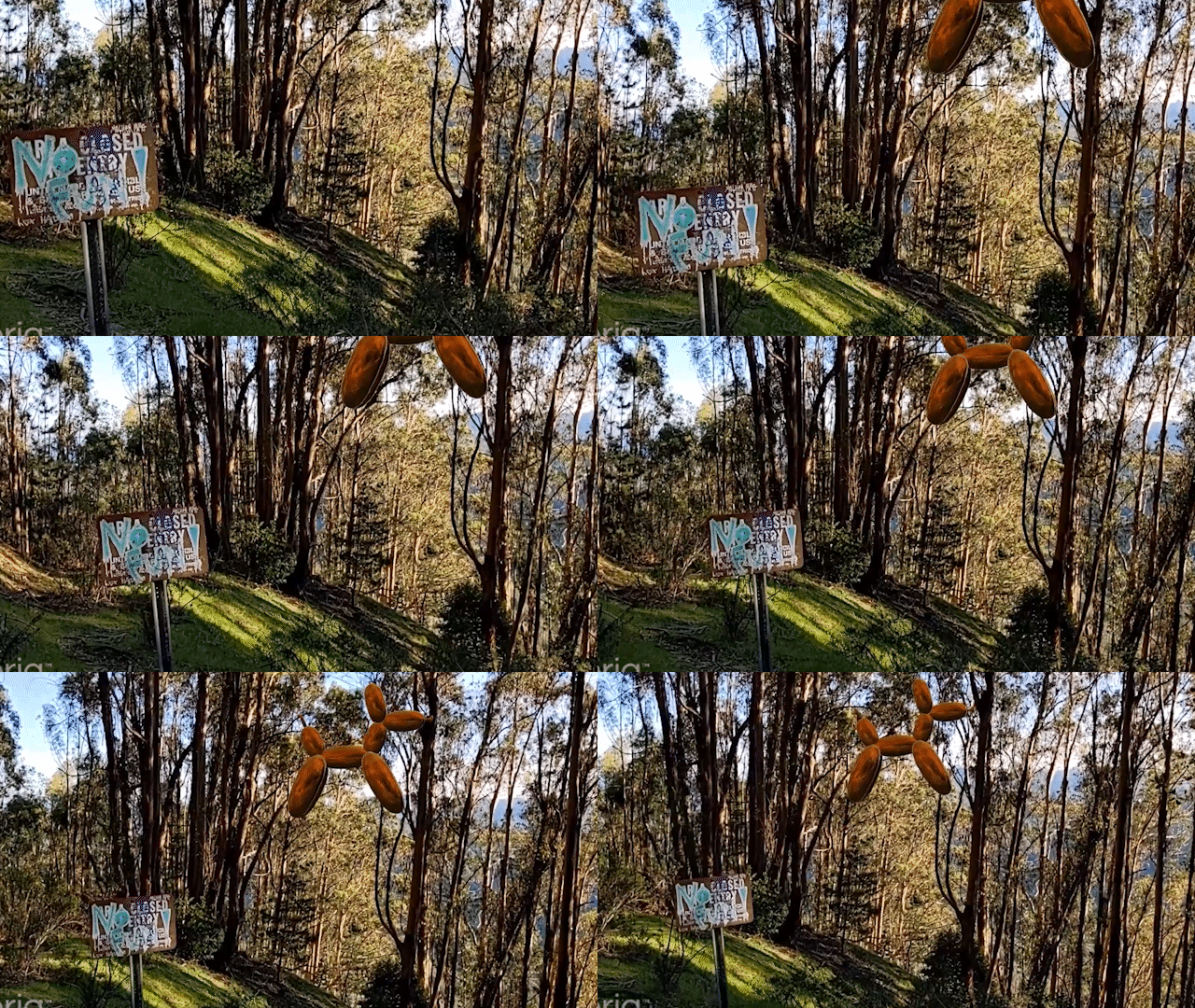
Signs with special distinguishing features were reliable targets and provided a stable anchor for AR content placement
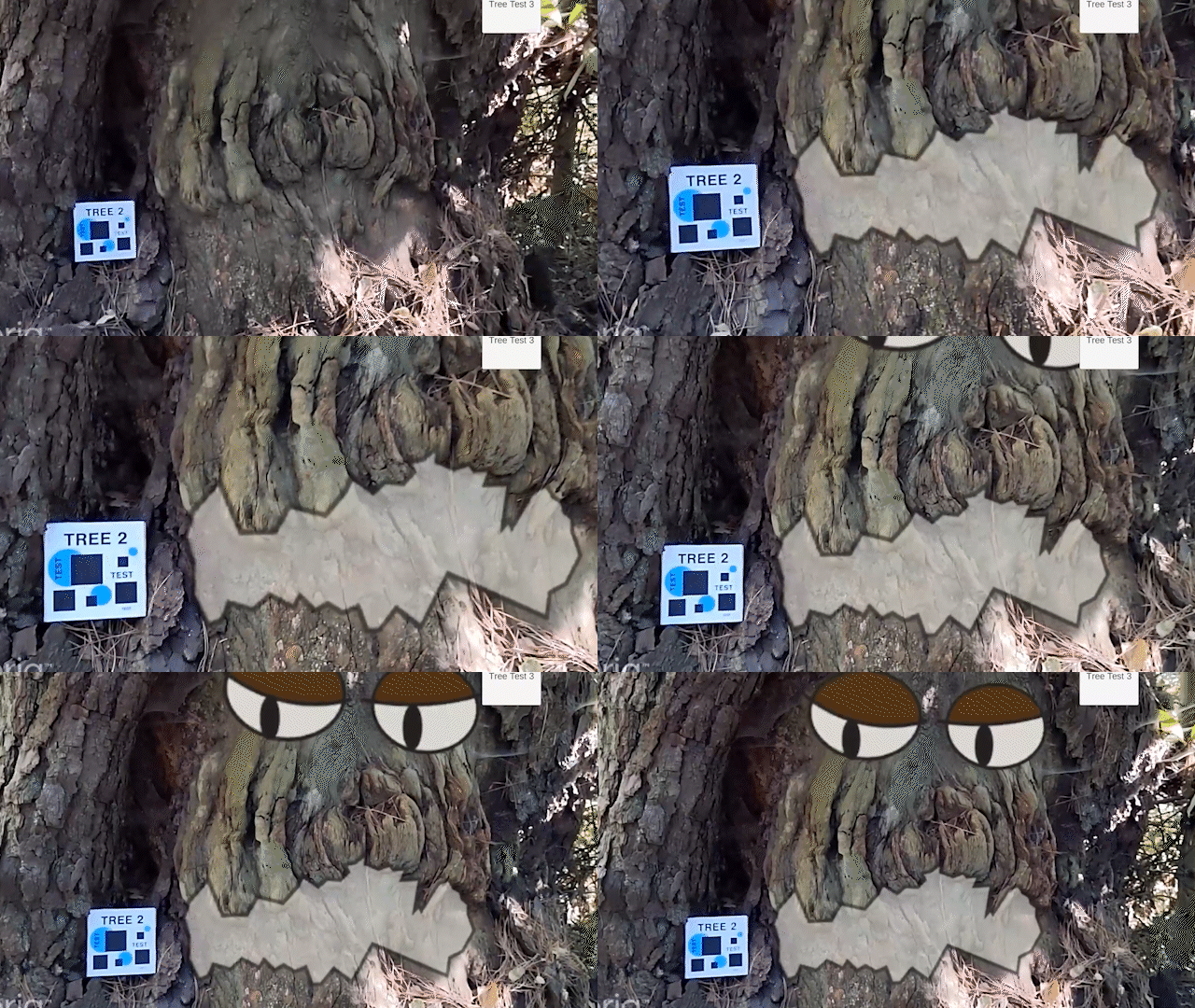
Using specially created image targets allowed for perfect placement of content, but was not as desirable due to the need for a permanent physical installation.
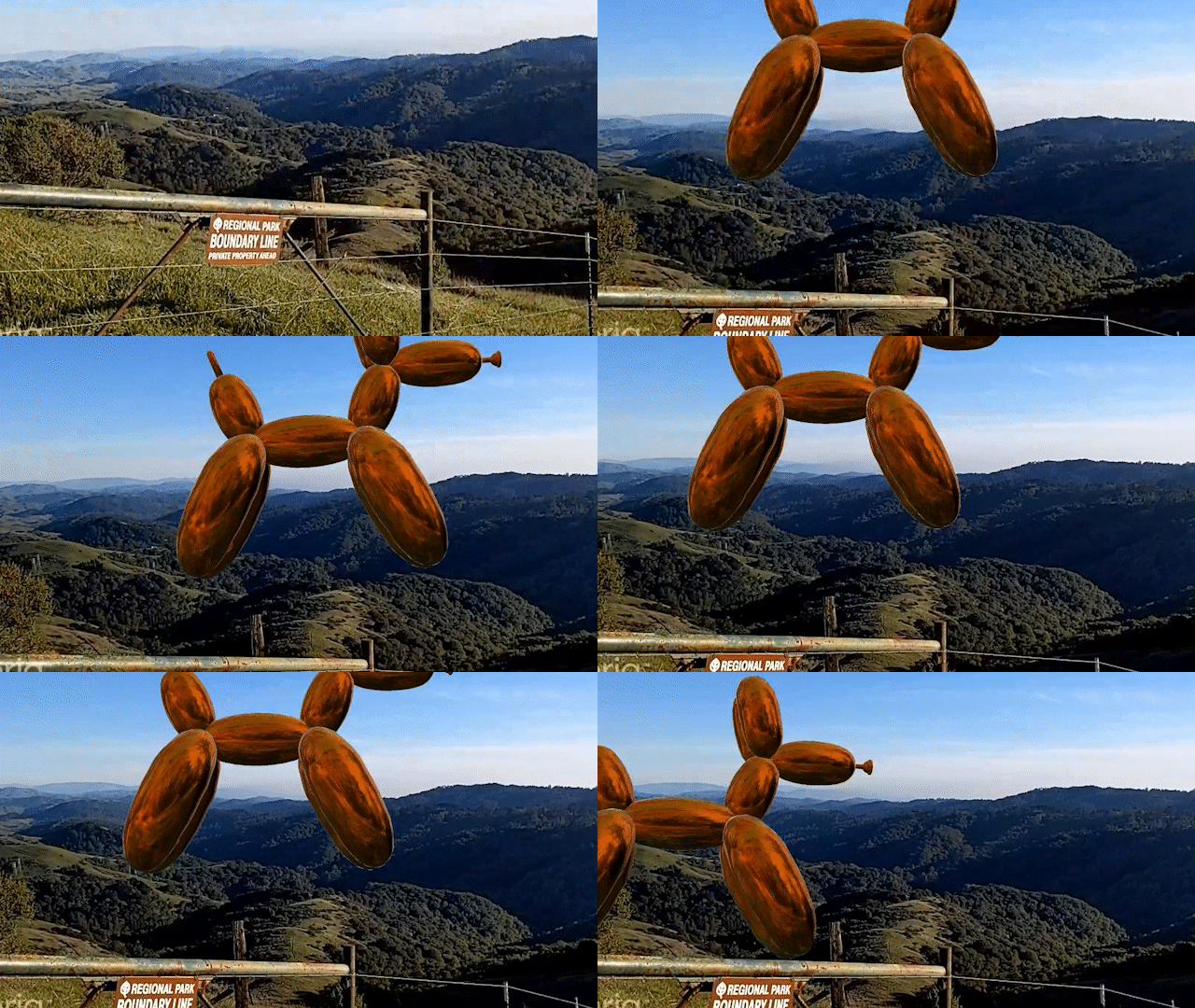
Signs placed at an angle made it difficult for the AR content to hold its position while moving around.
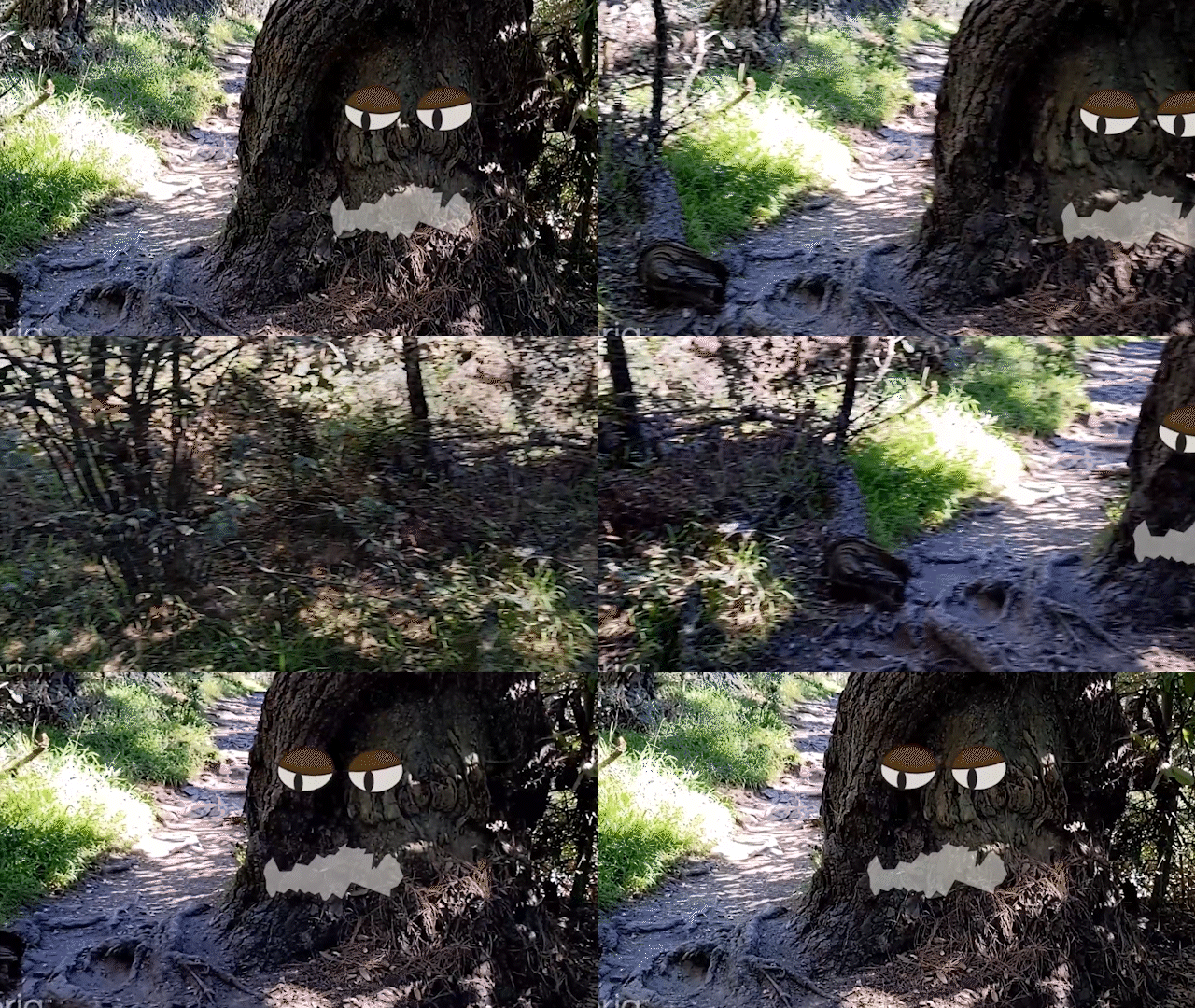
I experimented with mapping content using gyroscope positional data and photospheres taken from the site. Although content would initialize in the correct position, the gyroscope was not accurate enough to maintain the position of the AR content.
Plant Protection AR


Preventing park guests from harming plants through AR personification
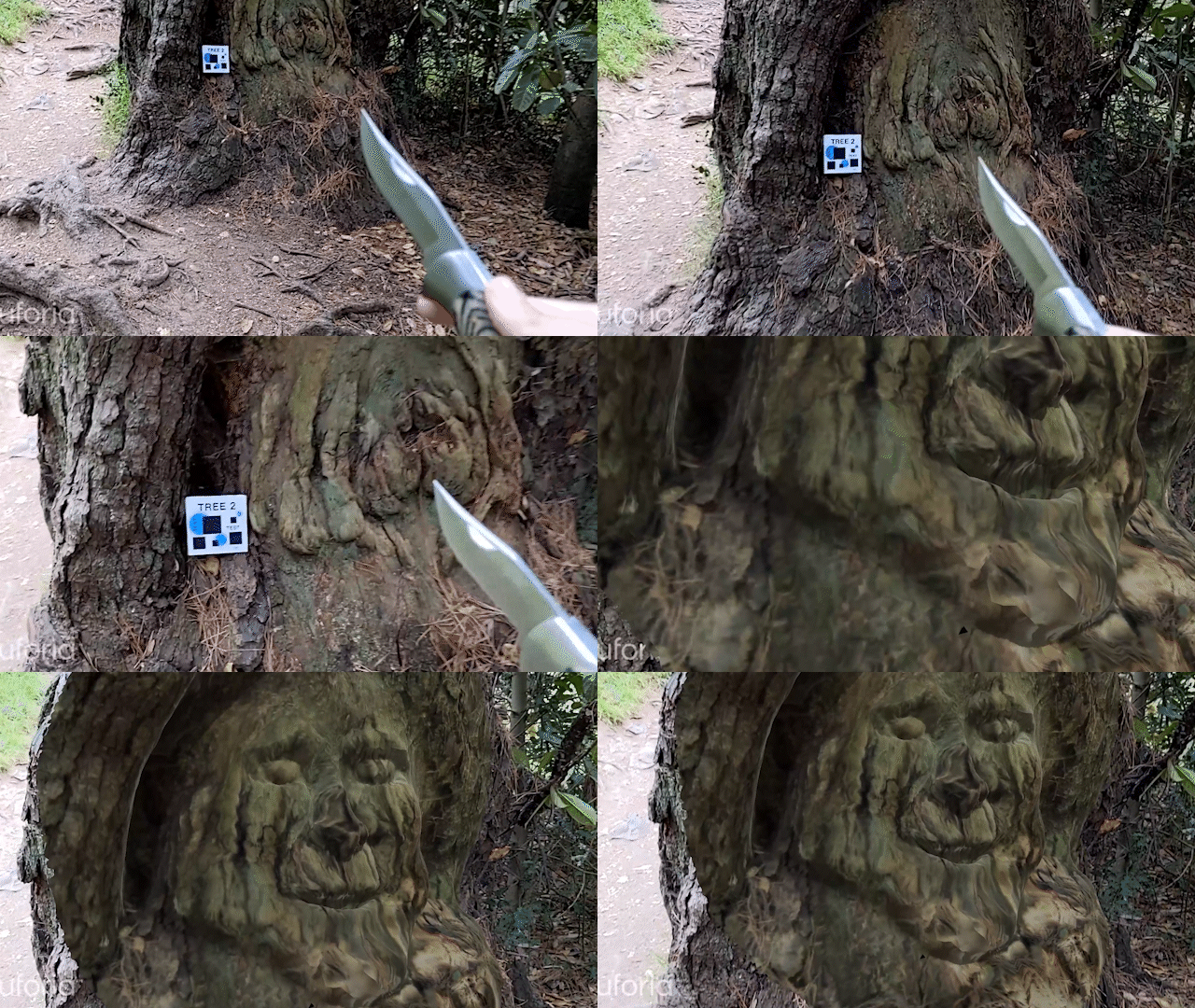
While conducting AR research at parks, I observed a common problem that many park goers would pick plants from the ground or carve their names into trees without thinking about the harm they were causing to the plants. I wanted people to begin questioning this type of behavior, so for Future Park’s first project, I created an AR plant protection prototype. This prototype demonstrated how AR overlays could be triggered when a guest was on the verge of harming a plant and discourage them from following through with their actions. Personifying the tree with an animated face and giving it a voice could make it easier for park guests to view the tree as a living thing and be less likely to cause it harm.


Turning 3D Photoscans into animated faces
I explored methods of transforming 3D photoscans of trees into animated characters for Plant Protection AR. Using the Lidar sensor on the iPhone, I was able to 3D scan a section of a tree, then sculpt on top of the scan in Blender to create the animated face to use in my prototype.
Mobile AR on site prototype
Using mobile AR, I created a prototype to simulate what the experience of the app would be like. I used an image target to trigger the AR content to appear when a user got close enough to the tree. I envisioned that the final version of this app would use AI to detect when a plant is in danger and trigger the content automatically.
Reality Filters
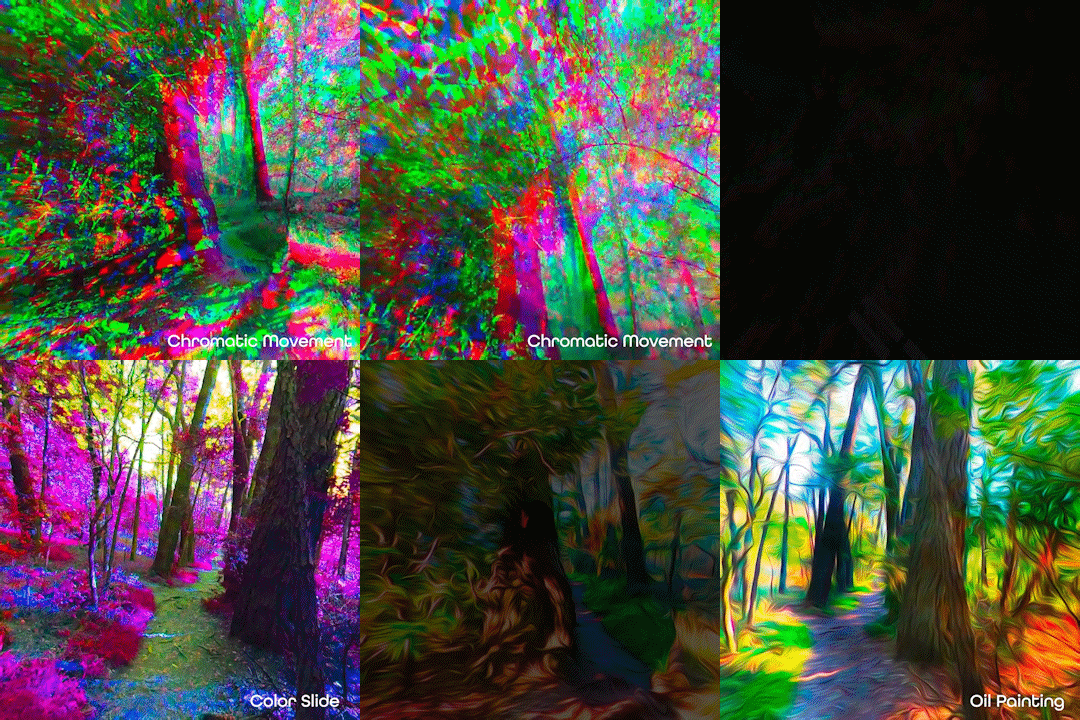
Hyper nature filters
When AR glasses improve, it will be possible to transition between alternate forms of reality through visual filter effects. This series of visual experiments explored possible filter effects through manipulating photospheres. A VR prototype was created in Unity for Meta Quest 2. This prototype allowed users to experience what it would feel like to be in nature with hyper filtered effects.
Wilderness filter
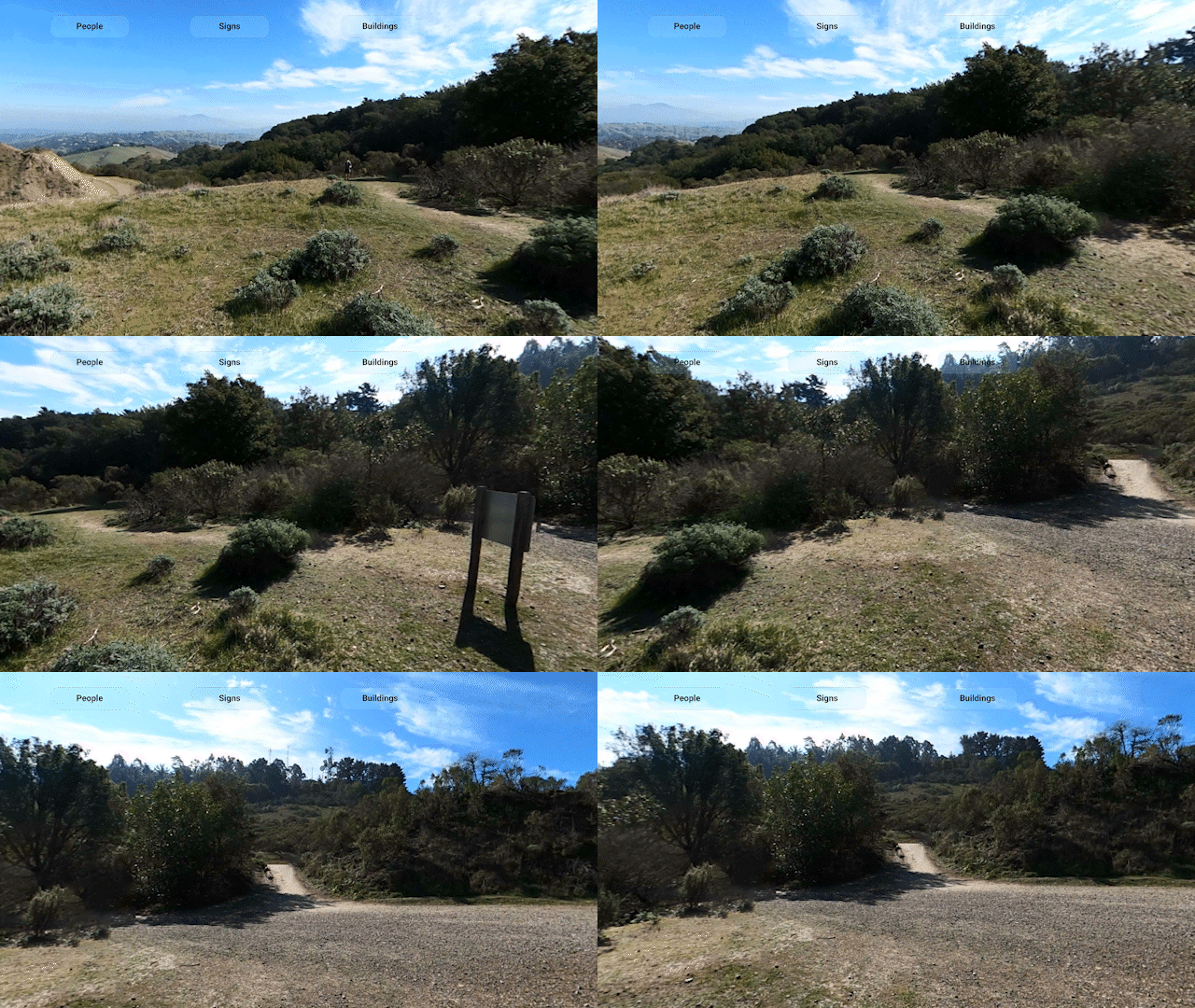
With overcrowded parks, nature sites feel far from wild. People, signs, and other human made structures detract from the wilderness experience. This prototype demonstrates the potential use of AR and AI to filter out all these distractions.
Owl Drones


The current and future state of drones
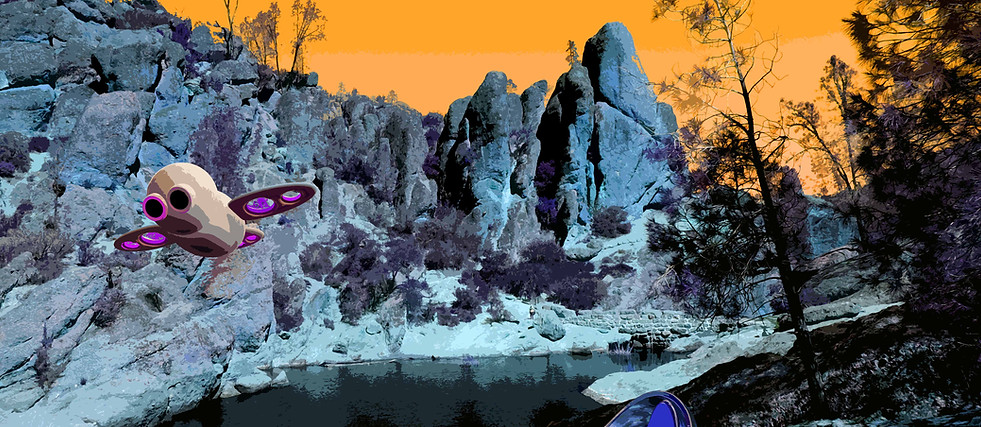
Drones are a controversial topic in nature preserves. Current major concerns around drones in nature is their negative impact on birds, noise level and the potential to cause harm in the event of a crash. For Future Park, I envisioned that within the next decade it would be possible to address these concerns through silent propellerless drones, with sophisticated AI to avoid causing harm to wildlife. This new class of drones could assist in wildfire prevention, search and rescue, and park safety. This new class of Future Park drowns were named Owl Drones based on their anamorphic design.

Wildfire prevention
Own Drones could survey the land searching for abnormally hot areas. If a temperature is discovered that seems abnormally hot, the Owl Drone could investigate further to identify if the heat source is a potential wildfire threat. They would be able to distinguish between human created controlled fires versus naturally started brush fires.
Mixed reality Owl Drone trail preview


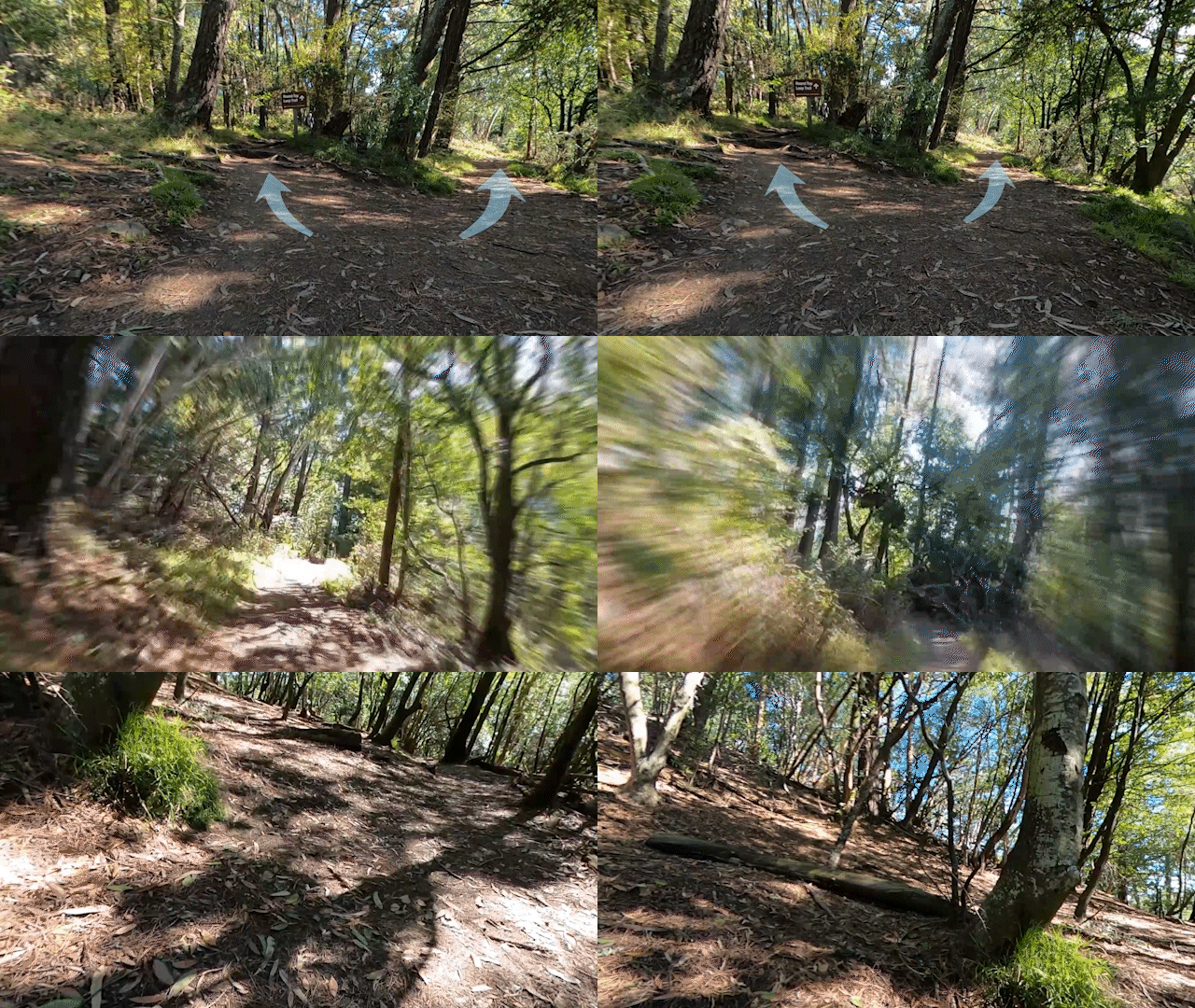
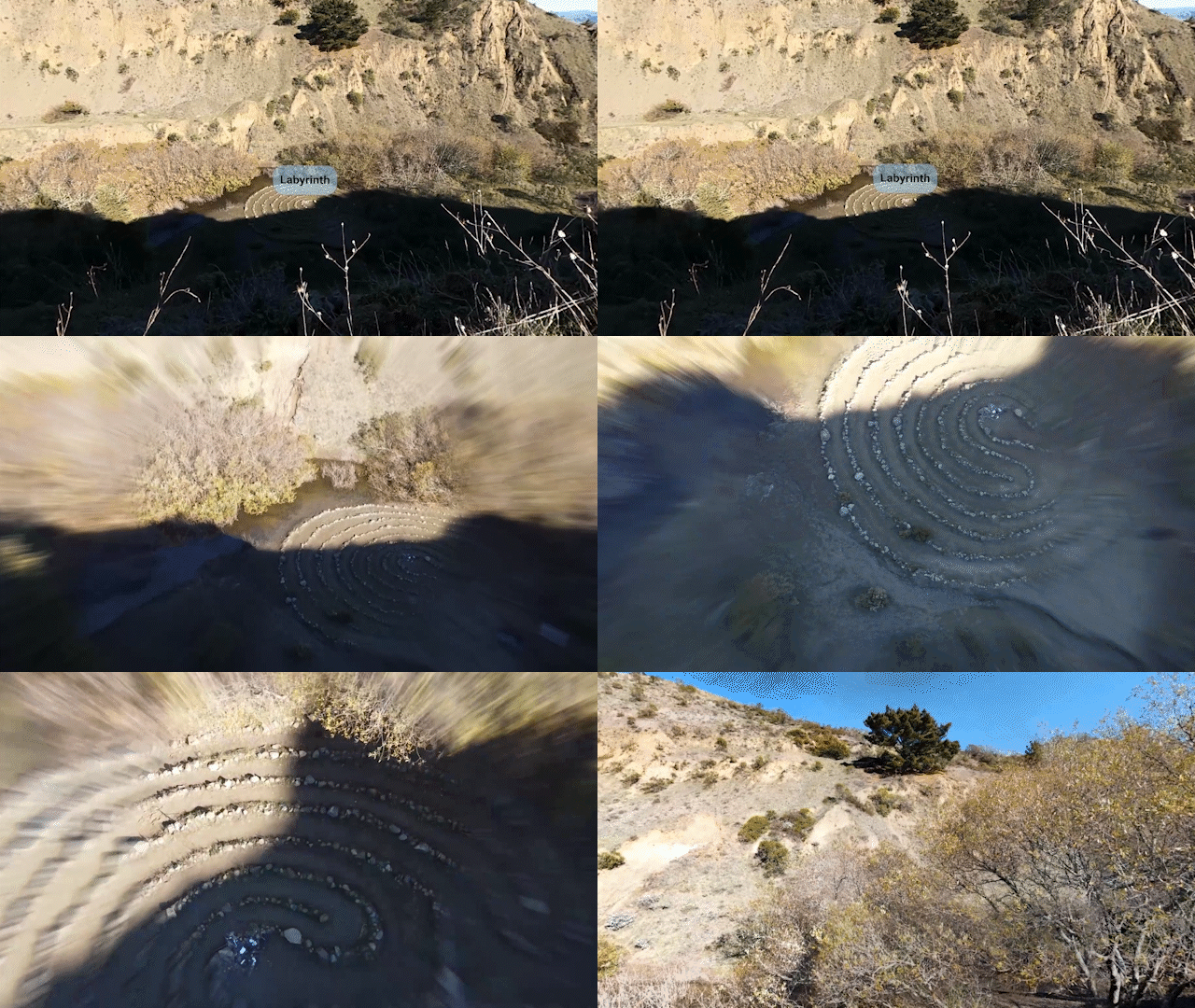
If Owl Drones became accepted by parks to address wildfires and safety concerns, to help fund the project, Owl Drones could be checked out by park guests to assist in new forms of on trail experiences. One of these experiences could be a mixed reality trail navigation experience. I created a prototype for the experience of previewing what certain parts of the trail look like and where they end by sending out their Owl Drone. I focused on features like how long a user’s attention span would be for viewing a preview and how to make the experience feel immersive.
Trail preview prototype
Hand gesture drone control
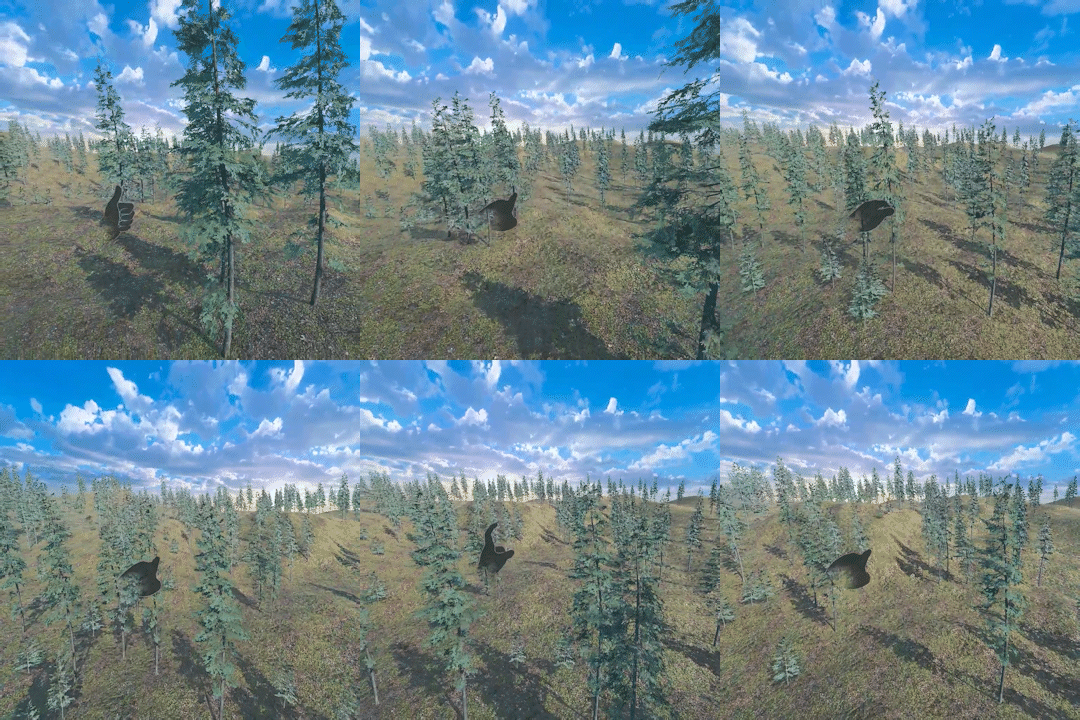
After the trail preview prototype, I was interested in exploring a more frictionless experience of flying drones. I created a VR prototype that demonstrated how hand gestures and head position tracking could allow park guests to fly drones without a controller making for a more immersive experience.
Trail Hoverpod


Addressing trail accessibility and ecosystem preservation
To make trails more accessible for people with limited mobility, parks have to resort to pouring concrete or laying wood to make trails wheelchair compliant. These trails are often limited and not as captivating as trails that able bodied park guests get to experience. Walking trails also pose a threat to plants like Redwood trees who have delicate root systems. In the future, Hoverpods could provide a solution to these problems. For Future Park’s final project, I prototyped a trail hoverpod experience in VR to allow people to experience what it would feel like to float through a trail. This VR experience gave users the ability to apply different visual and audio filters for a more interpretive experience.

AR Interface Design
The VR prototype simulated a hoverpod that would be controlled with a fully AR interface. The UI allowed users to test out different visual filters and audio. A guided tour audio option allowed users to learn about the parks as they floated down the trail. Users could opt to hide the entire UI once they picked their desired audio and visual filters
VR Hoverpod Prototype

Future Park Publication


Future Park's fictional 30th anniversary publication
A Future Park publication was created that included all of my research and prototypes. In this publication, I take on the persona of Future Parks founder and the book takes the form of a 30th anniversary documentation of Future Parks fictional achievements. The fictional work explored in the book starts in the year 2020 and ends in 2050 with the adoption of Future Park in the Nation Park System as an official vendor for drone and hoverpod services. A link to a PDF version of the publication can be found below.