Bioplastic Exploration
Investigating a more sustainable prototyping material
Toxic materials like MDF and foam blocks are commonly used in design prototyping. These materials cannot be recycled or composted, and end up in the landfill once the project is completed. To reduce waste created in the experimental art and design process I developed a compostable sheet material that could be made in your own home.
Ingredients
All the ingredients used to make this bioplastic are nontoxic so it is safe to work with in your kitchen. To keep everything consistent, all products used were Whole Foods' 365 brand. The ingredients included Distilled Water, White Vinegar, Corn Starch, and Vegetable Glycerin.


Recipe
2 Tablespoons of Cornstarch
6 Tablespoons of Water
1.5 Teaspoons of Glycerin
1.5 Teaspoons of Vinegar
Heating Process
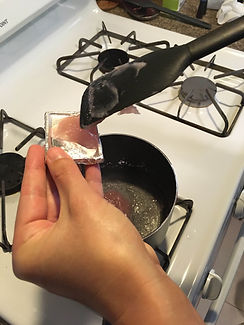
All the ingredients were combined in a non stick pan. The mixture was heated for 15 minutes with a low heat. The process photos show how the mixture changes during the heating process. It is important to frequently stir to prevent burning the material. Food coloring was added to this batch resulting in a pink color.


Mold Making
To achieve a consistent thickness, 3D printed molds were used to form the bioplastic into a sheet material. A hole on one of the sides was used to drain excess plastic. All molds were wrapped in aluminum foil to allow for easy demolding.


Mold Casting
Once the bioplastic was finished being heated, it was immediately transferred to the molds. The bioplastic was spread around in the mold with a stick and then compressed by the top of the mold. The whole allowed the excess material to escape.


Material Properties

Clear Bioplastic
Without food coloring, the bioplastic is clear when thin and a milky clear when thick. The bioplastic is prone to warping as it dries. If heated further in a oven while in a mold it may hold its shape better. The material is very easy to cut with scissors or a knife, but also easy to tear when thin.

Hemp Bioplastic Composite
The addition of a half a cup of hemp fibers to the recipe made the bioplastic more tear resistant. The hemp bioplastic composite is semi transparent and allows light to pass through.
Learn More

Guardian Orbs

Reclaim Planter

Reclaim Gallery
